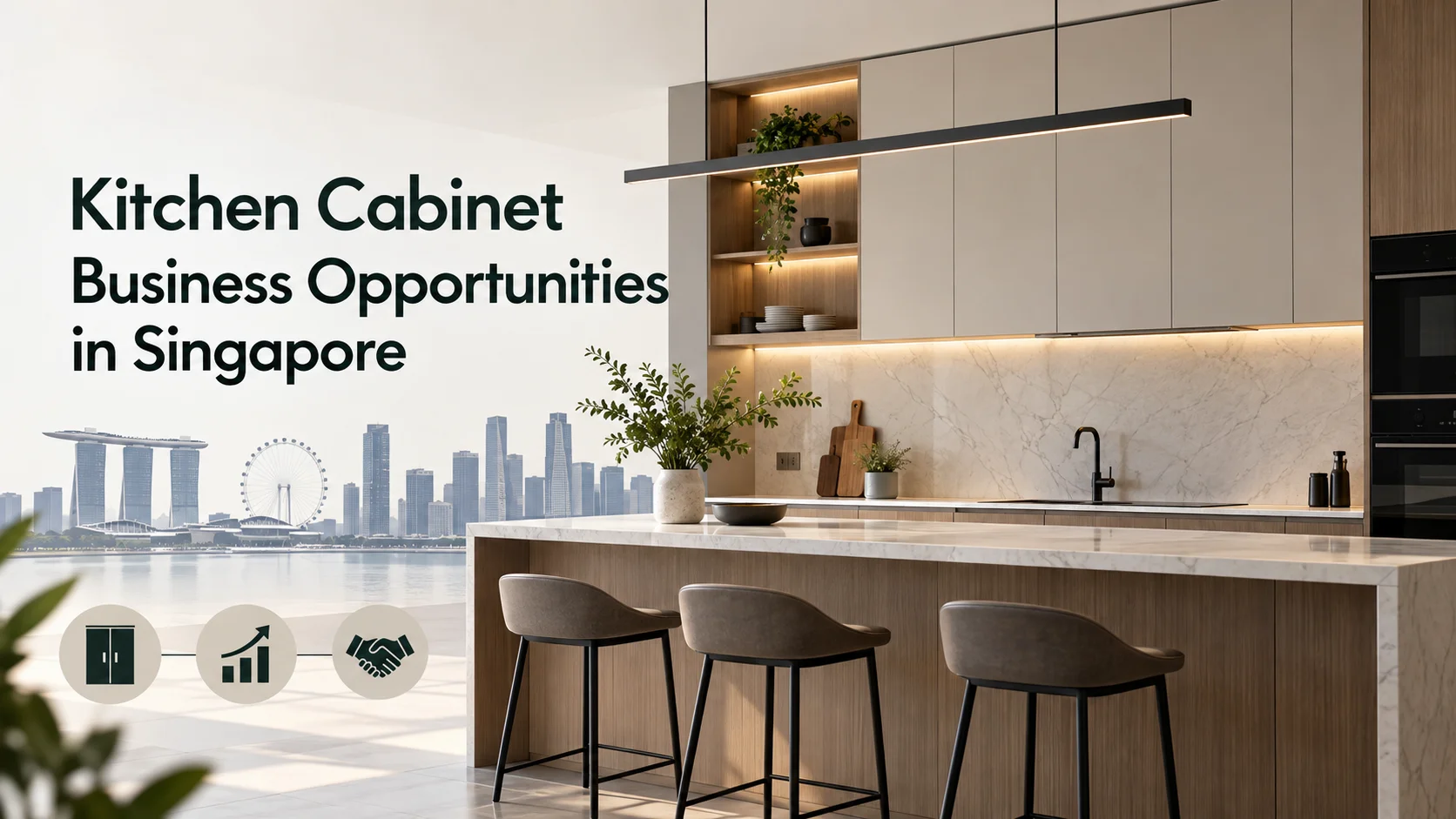

Singapore presents promising opportunities for entrepreneurs entering the kitchen cabinet business, with Singapore’s residential property market being an important source of potential demand. According to Singapore’s Housing & Development Board (HDB), the government launched 29,975 new flats in 2025, comprising 19,723 Build-To-Order (BTO) flats and 10,252 Sale of Balance Flats (SBF) units. HDB also plans to launch approximately 19,600 BTO flats in 2026, with more than 4,000 offering waiting times of less than three years. These figures indicate a substantial pipeline of homes that will eventually require kitchens, storage systems and interior furnishing solutions.
Although these housing figures do not directly measure kitchen cabinet sales, they provide a useful indicator of potential demand. New homeowners may purchase cabinetry for their first homes, while existing homeowners invest in kitchen renovations, improved storage and contemporary interior designs.
For entrepreneurs, the opportunity extends beyond selling individual cabinets. A well-positioned dealership can serve homeowners, interior designers, renovation contractors, property investors and developers with coordinated cabinetry solutions.
Becoming a cabinet dealer in Singapore can offer a practical route into the home improvement industry, particularly for entrepreneurs who combine reliable product sourcing, effective marketing and professional customer service. Partnering with an established manufacturer such as OPPOLIA may also provide access to product expertise, training and dealership support.
- 1. Why Is Singapore an Attractive Market for Cabinet Dealers?
- 2. Why Become a Kitchen Cabinet Dealer Instead of Starting from Scratch?
- 3. What Revenue Opportunities Can a Cabinet Business Develop?
- 4. Is a Cabinet Franchise Better Than an Independent Dealership?
- 5. How to Start a Kitchen Cabinet Business in Singapore
- 6. Why Consider OPPOLIA for Your Singapore Dealership?
- In Conclusion
- FAQs
1. Why Is Singapore an Attractive Market for Cabinet Dealers?
Singapore is one of Southeast Asia’s most organized renovation markets. Homeowners commonly work with interior designers, renovation contractors and project managers, creating several channels through which cabinet products can reach the customer. A dealer that combines reliable products with accurate quotations and dependable installation can build repeat business through referrals.
The country’s housing profile is particularly relevant. HDB apartments often require efficient storage solutions for compact kitchens, while private condominiums and landed homes may demand higher levels of customization, premium finishes and integrated appliances. This creates room for several price segments rather than a single standardized product range.
- HDB renovation: Practical layouts, durable finishes and space-efficient storage are major priorities.
- Condominium projects: Buyers often seek contemporary design, coordinated finishes and professional project management.
- Landed homes: Larger kitchens can support premium materials, islands, tall units and customized layouts.
- Investment properties: Landlords and developers typically value durable, easy-to-maintain solutions delivered within a defined budget.
- Resale homes: Older kitchens may require complete replacement, creating opportunities for full-service cabinet sales.
2. Why Become a Kitchen Cabinet Dealer Instead of Starting from Scratch?
Launching a cabinet business independently requires entrepreneurs to identify suppliers, assess product quality, establish operating procedures and develop a credible brand. These responsibilities can consume considerable time and capital before the business secures its first customer.
A dealership model can simplify some of these challenges by connecting the entrepreneur with an established manufacturer and its product portfolio.
Access to an established product range
A manufacturer with a broad selection of finishes, cabinet configurations, storage accessories and complementary furniture can help a dealer serve different customer segments. Instead of developing every product independently, the business can concentrate on sales, consultations, project coordination and local marketing.
OPPOLIA offers cabinetry and whole-house furnishing solutions, allowing dealers to explore opportunities beyond the kitchen alone.
Professional training and operational support
An effective dealership partnership may provide product education, sales guidance, design resources and marketing assistance. These services can be particularly valuable to entrepreneurs who have commercial experience but limited technical knowledge of cabinetry.
However, support differs between manufacturers. Before signing an agreement, review the actual training provided, marketing responsibilities, territory arrangements, ordering procedures and after-sales obligations.
A more structured route to market
A dealership can give a new business a defined operating model without requiring the entrepreneur to manufacture cabinets. Depending on the agreement, the dealer may focus on generating leads, presenting designs, coordinating customer requirements and supporting local service delivery.
This structure can be attractive to entrepreneurs who prefer building a customer-facing business rather than managing a manufacturing operation.
3. What Revenue Opportunities Can a Cabinet Business Develop?
A successful kitchen cabinet business in Singapore should not rely on a single customer type or product category. Diversifying its services can create more opportunities to generate enquiries and increase the value of each customer relationship.
Kitchen cabinet sales
Kitchen cabinets are a natural starting point. Customers may need complete cabinet systems, replacement units, additional storage or upgraded finishes. A dealer can help them compare materials, configurations, hardware and design options.
Effective cabinet sales depend on understanding customer requirements, communicating product benefits clearly and following up consistently.
Custom cabinet solutions
Some homeowners need cabinetry tailored to unusual layouts, specific dimensions or individual storage requirements. Offering a custom cabinet consultation can help the business address these needs and compete on design expertise rather than price alone.
Dealers should confirm the manufacturer’s available customisation options, measurement procedures, production lead times and installation arrangements before promising specific specifications.
Whole-house storage and furnishing
Customers furnishing a new home may also need wardrobes, bathroom vanities, laundry cabinets and other storage solutions. Offering complementary categories can increase average project value and create opportunities for repeat referrals.
A broader product range also allows the dealer to build relationships with interior designers and renovation contractors who manage multiple areas of a home.
Business-to-business partnerships
Interior designers, builders, renovation firms and property professionals can become valuable sources of recurring enquiries. Rather than depending entirely on individual showroom visitors, dealers can establish referral relationships and develop a more predictable sales pipeline.
To make these partnerships effective, provide clear quotations, reliable communication, realistic delivery schedules and consistent after-sales support.
4. Is a Cabinet Franchise Better Than an Independent Dealership?
Entrepreneurs often compare a cabinet franchise with an independent dealership. Although both models can involve working under an established brand, their commercial structures may differ.
A franchise typically operates under a defined business system and brand agreement, potentially involving franchise fees, operating standards and ongoing obligations. A dealership may focus more specifically on authorised product sales, distribution, referrals or local customer service.
Neither model is automatically more profitable. The right choice depends on the contract, investment required, available support and the entrepreneur’s preferred level of operational control.
Before making a decision, ask potential partners:
- What are the initial investment and ongoing fees?
- Is a physical showroom mandatory?
- Are sales territories exclusive or shared?
- Who manages design, production, delivery and installation?
- What marketing, training and lead-generation support is available?
- Are there minimum sales targets or purchasing commitments?
- How are customer complaints and warranty claims handled?
OPPOLIA promotes a global dealership programme with product training, local marketing support and showroom guidance. Entrepreneurs should confirm the current Singapore-specific terms directly with the company rather than assume that every market has identical requirements.
5. How to Start a Kitchen Cabinet Business in Singapore
A sound business plan should connect the market opportunity with the practical realities of running a local company.
Step 1: Research your target customers
Decide whether to focus on new homeowners, resale-flat renovations, private residential properties, interior designers or renovation contractors. Each segment has different budgets, decision-making processes and expectations.
Research competing cabinet suppliers, their product ranges, service offerings and positioning. Look for gaps that your business can address, such as better design consultations, specialised storage solutions or clearer project communication.
Step 2: Evaluate suppliers and dealership terms
Assess product quality, material options, manufacturing capacity, lead times and quality-control procedures. Request product samples and review the manufacturer’s installation guidance and warranty policies.
OPPOLIA’s guide, How to Start a Cabinet Dealership Business, provides a useful framework for evaluating manufacturers, estimating startup costs and planning marketing activities.
Step 3: Prepare a realistic startup budget
Potential costs include business registration, showroom rental, display cabinets, staff salaries, marketing, design software, logistics and working capital. Depending on your business model, you may also need to budget for installation coordination, insurance and customer support.
Do not base your decision on projected sales alone. Estimate monthly operating expenses, expected gross profit per project, lead conversion rates and the time between customer deposits and final payments. Maintain sufficient cash reserves for delays and unexpected costs.
Step 4: Establish a showroom and sales process
A showroom helps customers assess finishes, hardware, cabinet construction and design possibilities. However, its size and location should reflect your target market and budget.
Develop a consistent process covering initial enquiries, site measurements, quotations, design approvals, order confirmation, delivery and after-sales service. Clear documentation reduces misunderstandings and helps protect margins.
Step 5: Build a digital marketing strategy
A professional website can attract customers searching for kitchen cabinets, renovation ideas and storage solutions in Singapore. Publish useful content about cabinet materials, layout planning, maintenance and budgeting.
Optimise service pages for relevant local searches, maintain an accurate business profile and showcase completed projects with customer permission. Social media, paid advertising and referral partnerships can supplement organic search traffic.
Avoid competing exclusively on price. Demonstrate your value through product knowledge, transparent quotations, reliable communication and dependable project coordination.
Step 6: Check Singapore’s business requirements
Register the business with the Accounting and Corporate Regulatory Authority (ACRA), where applicable, and confirm relevant tax, employment, import and consumer-protection obligations. If renovation or installation work is part of your offering, establish which licensing, contractual and regulatory requirements apply to the specific services performed.
Clarify responsibilities with contractors and installation partners before accepting customer projects.
6. Why Consider OPPOLIA for Your Singapore Dealership?
For entrepreneurs seeking an established cabinetry partner, OPPOLIA is one option worth evaluating. Its global dealership programme describes support covering product training, showroom planning, sales guidance and local marketing activities.
Such support may help a new dealer organise its business more efficiently, while an existing furniture or renovation company may be able to expand its product portfolio and reach new customers.
The important consideration is whether the programme fits your commercial objectives. Review the proposed agreement, investment requirements, available product categories, shipping arrangements, warranty coverage and local service responsibilities. Request clear explanations of any financial projections or support commitments before making an investment.
You can review the OPPOLIA dealership programme and discuss the conditions applicable to your intended Singapore operation.
In Conclusion
Singapore’s continuing housing development, renovation activity and demand for practical storage solutions create a credible market opportunity for entrepreneurs considering a kitchen cabinet business. However, housing statistics indicate potential demand, not guaranteed sales or profits. Commercial success will depend on product quality, supplier reliability, customer acquisition, cost control and service delivery.
Becoming a cabinet dealer can provide a structured entry into this market, particularly when supported by a suitable manufacturer and a well-researched business plan. By combining kitchen cabinetry with complementary storage solutions, professional consultations and digital marketing, entrepreneurs can build a business designed for sustainable growth.
Take the next step toward building your cabinet business by exploring the OPPOLIA dealership programme. Whether you’re planning a new showroom or expanding an existing business, contact our team to discuss dealership opportunities and how they could fit your goals in Singapore.
Contact OPPOLIA to learn about programme requirements, available support and the application process.
FAQs
It can be profitable, but results depend on supplier pricing, operating expenses, sales volume, project margins and customer acquisition costs. Entrepreneurs should prepare realistic financial projections and account for showroom rent, staffing, marketing, delivery and after-sales responsibilities before investing.
The required investment depends on the business model, showroom size, display requirements, staffing and working capital. Obtain a detailed cost breakdown from prospective suppliers and calculate how much cash is needed to cover both startup expenses and the initial operating period. Confirm OPPOLIA’s current requirements directly with its dealership team.
Industry experience can be helpful, particularly in design, renovation or furniture sales, but commercial skills and willingness to learn are also important. Ask potential suppliers about product training, sales resources, design tools and ongoing operational support.
Useful channels include local SEO, a professional website, showroom consultations, social media, referrals and partnerships with interior designers and renovation contractors. Publishing helpful content and displaying completed projects can also build trust with prospective customers.
Review product quality, pricing, territory terms, minimum purchases, lead times, warranty responsibilities, training, design support, marketing assistance and the application process. Confirm that the program can support both your initial Singapore launch and your intended long-term growth.
OPPOLIA publishes a global partnership program that outlines dealership support, training, showroom guidance, and marketing assistance. Entrepreneurs interested in becoming a partner should contact OPPOLIA directly to confirm Singapore territory availability, eligibility criteria, investment expectations, commercial terms, and the application process.