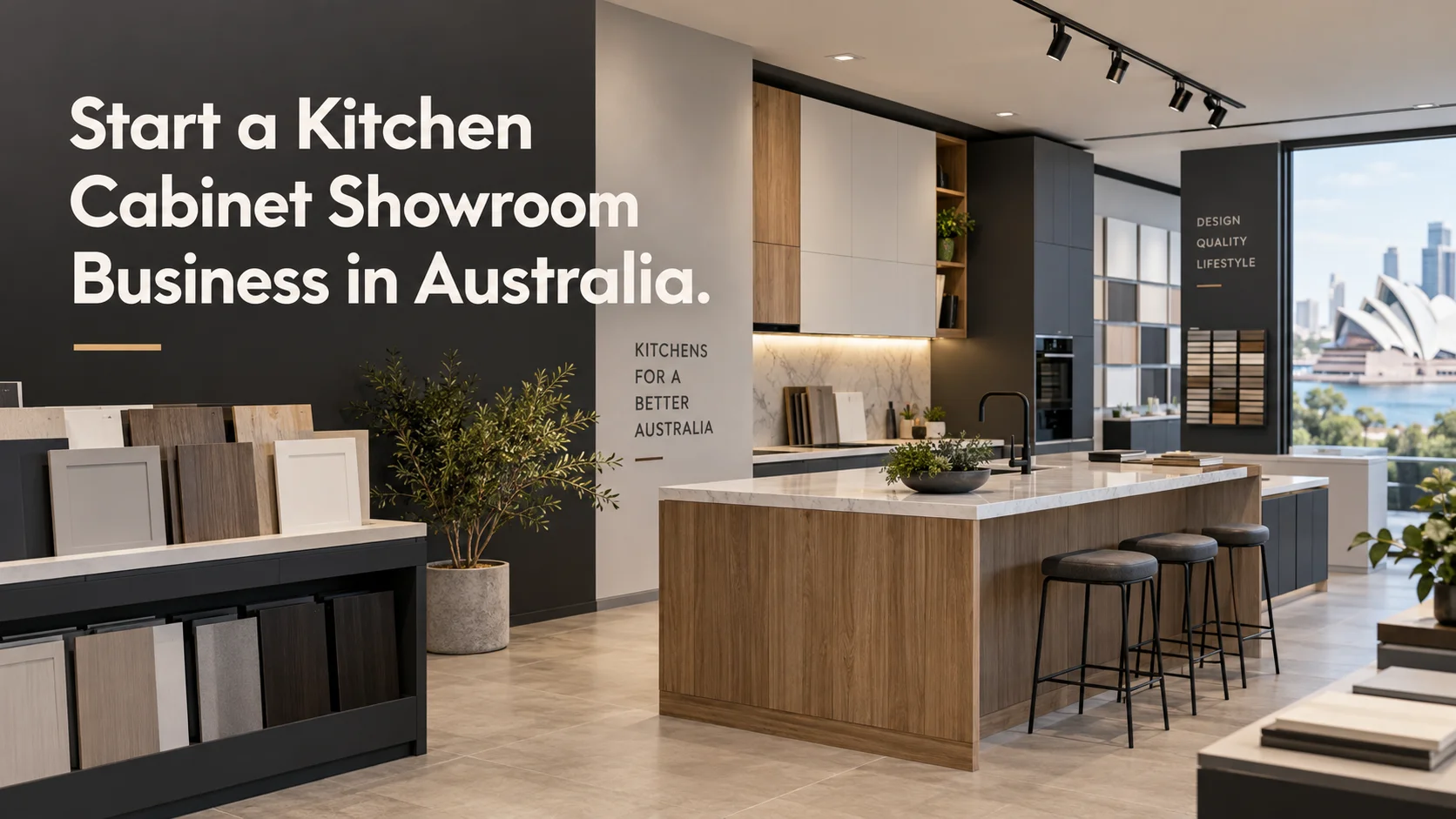

Australia’s kitchen renovation market presents opportunities for entrepreneurs, construction companies, furniture retailers, and distributors looking to enter the home improvement industry. A kitchen cabinet showroom can serve homeowners undertaking renovations as well as builders, developers, interior designers, and property investors seeking reliable cabinetry solutions.
According to the Australian Bureau of Statistics (ABS), the December 2025 quarter recorded 53,567 dwelling commencements, an increase of 8.0% from the previous quarter. The value of total building work done reached approximately AUD 43.9 billion during the same period. These figures demonstrate the scale of Australia’s residential and construction activity, which provides an important demand base for kitchen cabinetry and related building products.
The opportunity extends beyond selling individual cabinets. Customers increasingly need complete kitchen solutions that combine design, storage, materials, functionality, and installation coordination. For business owners, establishing a kitchen cabinet showroom in Australia can create a platform for building local relationships, generating project enquiries, and developing recurring B2B sales.
However, success depends on more than choosing an attractive showroom location. Product sourcing, pricing, customer acquisition, design capabilities, and supplier relationships all influence long-term profitability. This guide explains how to establish and grow a competitive kitchen cabinet showroom business in Australia.
- 1. Understand the Australian Kitchen Cabinet Market
- 2. Choose the Right Kitchen Cabinet Business Model
- 3. Research Your Target Market and Location
- 4. Find Reliable Kitchen Cabinet Suppliers
- 5. Calculate Your Startup Investment and Financial Plan
- 6. Design a Professional Kitchen Cabinet Showroom
- 7. Build a Skilled Sales and Installation Team
- 8. Develop a Marketing Strategy to Attract Australian Customers
- 9. Understand Australian Business and Compliance Requirements
- 10. Consider an OPPOLIA Dealership Partnership
- Conclusion: Build Your Kitchen Cabinet Showroom Business in Australia
- FAQs about starting cabinet business in Australia
1. Understand the Australian Kitchen Cabinet Market
Before investing in a showroom, entrepreneurs should understand where demand comes from and which customer segments offer the strongest commercial opportunities.
Several market indicators are worth considering:
- Renovation expenditure: KPMG reported that Australia’s real renovation spending increased by 6.5% between 2018–19 and 2023–24.
- Regional opportunities: Brisbane recorded approximately AUD 874.2 million in renovation expenditure in KPMG’s local government area analysis, followed by Northern Beaches in Sydney at AUD 357.8 million.
- Replacement housing: Renovations and one-for-one dwelling replacements represented 46% of Australia’s residential building investment in 2023–24.
These figures suggest that kitchen cabinet businesses should not rely exclusively on new residential developments. Homeowners upgrading existing properties, renovation contractors, and property investors can provide important sources of demand.
A 2026 industry forecast from 6Wresearch estimates that Australia’s kitchen cabinet market was worth USD 83 million in 2025 and could reach USD 98 million by 2032, representing a projected CAGR of 2.4%. This is a third-party market estimate rather than an official ABS valuation.
For prospective showroom owners, the commercial opportunity lies in combining renovation demand with new-build projects and establishing a product offering that serves different budgets.
2. Choose the Right Kitchen Cabinet Business Model
There are several ways to enter Australia’s cabinetry industry. Your choice will influence your initial investment, operating expenses, product responsibilities, and long-term growth potential.
Independent kitchen cabinet showroom
You establish your own brand, source products from manufacturers, and manage sales, design, and customer relationships. This model offers greater control over branding and pricing but requires you to develop supplier relationships and operating systems independently.
Kitchen cabinet dealership
You partner with an established manufacturer and sell its products through your local business. Depending on the agreement, the manufacturer may provide product catalogues, design software, technical training, marketing materials, and showroom guidance.
This model is particularly suitable for entrepreneurs who have experience in furniture retail, construction, interior design, or distribution.
Cabinet franchise
A franchise-style arrangement may provide an established brand, operating procedures, and marketing resources. However, franchise fees, territory restrictions, minimum purchase requirements, and ongoing obligations can vary significantly. Review the commercial agreement carefully before committing.
Wholesale and distribution
Businesses with established relationships across construction and furniture retail may consider distributing products to other retailers, builders, and contractors. Selling wholesale kitchen cabinets can create opportunities for larger orders, although it requires careful management of logistics, inventory, pricing, and working capital.
For first-time entrepreneurs, a dealership model can offer a practical balance between independence and manufacturer support.
For a more detailed explanation of this approach, read OPPOLIA’s guide: How to Start a Cabinet Dealership Business. It explains supplier selection, showroom development, business planning, marketing, and the advantages of working with an established cabinet manufacturer.
3. Research Your Target Market and Location
Location is one of the most important decisions when establishing a kitchen cabinet showroom in Australia.
A showroom should be accessible to its target customers and positioned where homeowners, builders, interior designers, and renovation professionals can discover the business.
Consider metropolitan and regional markets such as:
- Melbourne, VIC: A diverse market for contemporary kitchen designs, apartment projects, and residential construction.
- Brisbane, QLD: Opportunities associated with residential development, home improvements, and population growth.
- Perth, WA: Potential demand from homeowners, residential builders, and renovation contractors.
- Adelaide, SA: Opportunities for independent retailers and businesses serving local residential projects.
These are potential markets to investigate, not guaranteed high-demand locations. Research local competition, commercial rents, residential development activity, and customer purchasing behaviour before signing a lease.
Ideally, choose a location with:
- Convenient parking and road access.
- Strong visibility from major commercial routes.
- Proximity to building material retailers or home improvement businesses.
- Sufficient space for kitchen displays and customer consultations.
- Room for future expansion.
A showroom in a well-positioned commercial precinct can generate walk-in enquiries while providing a professional environment for scheduled consultations.
4. Find Reliable Kitchen Cabinet Suppliers
Your supplier directly affects product quality, customer satisfaction, delivery performance, and profitability.
Australian showroom operators can source products from local manufacturers, international factories, or established cabinetry brands with dealership networks.
When comparing kitchen cabinet suppliers, evaluate the following factors.
Product quality and materials
Examine cabinet carcasses, door panels, hinges, drawer systems, finishes, and hardware. Request samples and technical specifications before making purchasing decisions.
Design flexibility
Customers have different preferences, budgets, and spatial requirements. Your supplier should offer sufficient flexibility in cabinet dimensions, colours, finishes, configurations, and storage accessories.
Manufacturing capacity
Confirm whether the manufacturer can handle both individual residential orders and larger construction projects. Consistent production capacity is particularly important when working with developers and builders.
Pricing and commercial terms
Compare wholesale pricing, payment conditions, minimum order quantities, shipping costs, and warranty arrangements. Do not evaluate a supplier based solely on its lowest quoted price.
Logistics and after-sales support
For imported cabinetry, investigate shipping arrangements, customs clearance, delivery schedules, replacement components, and responsibility for damaged or missing items.
Importers should also check applicable Australian import requirements, product compliance obligations, and any relevant timber or biosecurity controls before placing orders.
A dependable supply chain is essential for maintaining customer confidence and protecting your showroom’s reputation.
5. Calculate Your Startup Investment and Financial Plan
Starting a kitchen cabinet showroom in Australia requires a realistic financial plan. The investment will depend on location, showroom size, display requirements, staffing, and the business model.
Your initial budget should account for:
| Investment category | Key expenses |
|---|---|
| Business establishment | Registration, accounting and legal advice |
| Showroom | Lease, bond, fit-out and utilities |
| Product displays | Kitchen samples, doors and hardware |
| Technology | Computers, design software and quoting systems |
| Staffing | Sales consultants and kitchen designers |
| Marketing | Website, advertising and promotional materials |
| Operations | Delivery, installation and insurance |
| Working capital | Rent, wages and supplier payments |
Rather than relying on an industry-wide startup estimate, obtain actual quotations for your proposed location and business structure.
You should also prepare three financial scenarios: conservative, expected, and optimistic.
Calculate your expected monthly revenue using:
Monthly revenue = Number of completed orders × Average order value
Then estimate your gross profit after product costs, followed by operating expenses such as rent, salaries, marketing, delivery, and administration.
Pay particular attention to cash flow. Cabinet businesses may receive customer deposits before production, but supplier payment schedules and shipping costs can create significant funding requirements.
A profitable-looking sales pipeline does not necessarily mean the business has sufficient working capital.
6. Design a Professional Kitchen Cabinet Showroom
A physical showroom is one of your most valuable sales assets. Customers purchasing cabinetry often want to inspect materials, compare colours, test storage features, and understand how different designs work in real spaces.
Your showroom should demonstrate the quality and variety of your product range.

Consider including:
- Contemporary minimalist kitchen displays.
- Classic and transitional cabinet styles.
- Different countertop and door finishes.
- Pull-out storage and functional hardware.
- Handleless and modern cabinet systems.
- Wardrobe and bathroom vanity displays.
- Material samples and colour-selection stations.
Avoid filling every available space with displays. Instead, create a comfortable consultation area where customers can discuss budgets, layouts, measurements, and design preferences.
Digital design tools and 3D visualisation software can further improve the customer experience by allowing clients to see how their proposed kitchen may look before ordering.
A well-organised showroom should function as both a product exhibition space and a professional design consultation centre.
7. Build a Skilled Sales and Installation Team
Cabinetry is a considered purchase. Customers usually need guidance before selecting materials, layouts, hardware, and finishes.
Your team should be able to manage the complete customer journey.
Essential roles may include:
- Sales consultant: Handles enquiries, customer consultations, and quotations.
- Kitchen designer: Prepares layouts, measurements, and 3D presentations.
- Project coordinator: Manages orders, production updates, and delivery schedules.
- Installation partners: Complete site preparation, cabinetry installation, and adjustments.
You do not necessarily need to employ every specialist from the beginning. Smaller businesses can work with experienced contractors and installation partners to control fixed costs.
However, make sure responsibilities are clearly defined. Accurate measurements, installation standards, and communication between suppliers and installers are critical to avoiding costly disputes.
You should also establish a clear after-sales process for warranty enquiries, damaged components, and replacement orders.
8. Develop a Marketing Strategy to Attract Australian Customers
Even an attractive showroom needs consistent marketing to generate qualified enquiries.
A strong digital presence is particularly important because many customers research kitchen designs and compare suppliers before visiting a showroom.
Invest in local SEO
Optimise your website around commercially relevant searches, including:
- Kitchen cabinet showroom Australia
- Kitchen cabinets in Sydney
- Custom kitchen cabinets Melbourne
- Kitchen cabinet suppliers Australia
- Wholesale kitchen cabinets
- Modern kitchen showroom near me
Create dedicated location pages for the areas you genuinely serve. Include your showroom address, contact details, product categories, project photographs, and customer testimonials.
Use visual content marketing
Kitchen cabinetry is highly visual. Publish professional photographs, design comparisons, completed projects, and short videos showing storage systems and material details.
Instagram, Pinterest, Facebook, and YouTube can help potential customers discover your products.
Develop professional partnerships
Build relationships with:
- Residential builders and construction companies.
- Interior designers and architects.
- Kitchen renovation contractors.
- Property developers.
- Furniture retailers and building material distributors.
Offer trade pricing where commercially appropriate, provide reliable quotations, and maintain clear project communication.
Build a referral network
Satisfied customers can become an important source of new business. Encourage customers to share completed kitchen projects and provide honest reviews.
For a new showroom, combining local SEO, paid search advertising, professional networking, and referral marketing can create a more balanced lead-generation strategy than relying on walk-in traffic alone.
9. Understand Australian Business and Compliance Requirements
Before opening your business, ensure that the company meets relevant Australian legal and regulatory requirements.
Important considerations include:
- Business registration: Determine the appropriate business structure and apply for an Australian Business Number (ABN). Register your business name if required.
- Tax obligations: Understand GST registration requirements, invoicing obligations, and business tax responsibilities.
- Consumer protection: Ensure your products and services comply with Australian Consumer Law, including applicable consumer guarantees.
- Product compliance: Verify relevant product safety, building, and material requirements for the cabinetry you sell.
- Insurance: Consider public liability, product liability, workers compensation where applicable, and business property insurance.
- Import regulations: If importing cabinetry, confirm customs, tariff, biosecurity, and documentation requirements.
For imported products, remember that selling goods in Australia comes with local responsibilities. Your agreement with an overseas manufacturer should clearly establish warranty arrangements, product specifications, and responsibility for resolving defects.
Consult an Australian accountant and relevant legal or compliance professionals before commencing operations.
10. Consider an OPPOLIA Dealership Partnership
Building an independent kitchen cabinet showroom can be challenging, especially when it comes to establishing supplier relationships, developing product catalogs, sourcing design technology, and creating marketing systems.
Working with an established manufacturer can simplify some of these processes.

OPPOLIA offers international dealership opportunities for entrepreneurs interested in kitchen cabinets and whole-home furnishing solutions.
Its dealership program is designed to support businesses with resources including:
- Product supply: Access to kitchen cabinets, wardrobes, bathroom vanities, and other home furnishing products.
- Professional training: Product knowledge, sales guidance, and technical support.
- Showroom assistance: Guidance on showroom planning, product presentation, and store management.
- Marketing support: Assistance with online campaigns and offline promotional activities.
- Design technology: Digital design and quotation tools to support customer consultations.
- Business development: Dealer administration and guidance throughout business development.
According to OPPOLIA’s published dealership information, its preferred partners include businesses with experience in cabinetry, furniture, building materials, or interior design. The company also publishes showroom and investment expectations, which prospective Australian partners should confirm directly because requirements may vary between programs and markets.
For entrepreneurs, furniture retailers, construction companies, and distributors, this type of partnership can provide a structured starting point for entering the kitchen cabinetry market.
You can explore the OPPOLIA global dealership opportunities to learn more about its partnership model.
Conclusion: Build Your Kitchen Cabinet Showroom Business in Australia
Starting a kitchen cabinet showroom business in Australia requires careful market research, sound financial planning, reliable suppliers, and a customer-focused operating strategy.
The Australian residential construction and broader furniture markets provide a substantial foundation for cabinetry businesses. However, long-term success hinges on identifying the right customers, maintaining product quality, controlling operating costs, and cultivating strong relationships with industry professionals.
If you’re an entrepreneur entering the furniture industry, a construction company expanding into cabinetry, or an established retailer looking to diversify, choosing the right manufacturer and business model can significantly impact your success.
Take the next step toward building your cabinet business by exploring the OPPOLIA dealership program. Whether you’re planning a new showroom or expanding an existing business, contact our team to discuss dealership opportunities and how they could help you achieve your goals in Australia.
Contact OPPOLIA to learn about program requirements, available support, and the application process.
FAQs about starting cabinet business in Australia
The startup investment depends on your showroom location, display size, product range, staffing, and business model. Major expenses include commercial rent, showroom fit-out, cabinet displays, marketing, technology, and working capital. Request supplier quotations and prepare a detailed financial forecast before investing.
Yes, it can be a profitable business when managed effectively. Revenue opportunities come from new residential construction, kitchen renovations, custom cabinetry, and partnerships with builders and interior designers. Profitability depends on supplier pricing, sales volume, operating expenses, installation arrangements, and customer acquisition costs.
Compare local manufacturers and international suppliers based on product quality, manufacturing capacity, pricing, customisation options, delivery times, warranty arrangements, and after-sales support. Request product samples and verify the supplier’s ability to meet Australian market requirements before signing an agreement.
A cabinet dealer typically sells products supplied by a manufacturer under an authorised dealership arrangement. A franchise generally involves a more structured business system, with specific brand, operating, and contractual obligations. The exact differences depend on the agreement. Always review fees, territory rights, minimum purchasing requirements, and support services before committing.
Yes. You do not necessarily need to operate your own factory or have previous cabinet manufacturing experience. You can partner with an established manufacturer and focus on sales, showroom operations, customer service, design consultations, and project management. Training and ongoing supplier support can help you develop the necessary industry knowledge.